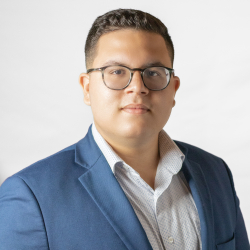
Teaching Piano Without Words
When Rafael first began teaching Donovan, their lessons were quiet in a way most piano lessons are not. Donovan had recently moved to the United States from France, and he did not speak English. In fact, he barely spoke at all. For a music teacher, that changes almost everything about how a lesson works. So much of teaching depends on language: explaining, encouraging, correcting, asking questions, making jokes, counting out loud, and finding the right words when a student gets stuck.
Rafael did not have many words available to him, so he had to build the lesson another way.
He demonstrated at the piano. He pointed. He used his hands, his face, and the sound of the music itself. A nod could mean “yes.” A pause could mean “listen again.” A small gesture toward the keys could invite Donovan to try. Instead of explaining every idea, Rafael had to show it, wait for it, and trust that Donovan was taking in more than he could say.
That kind of teaching requires a different kind of patience. It is one thing to help a student who can tell you, “I don’t understand,” or “I forgot,” or “Can you show me again?” It is another thing to sit beside a child and wonder what is happening inside his mind. Rafael had to pay attention to smaller signs: where Donovan looked, when his shoulders relaxed, when he seemed ready to try, when the room felt a little less unfamiliar.
Week after week, the lessons continued this way. The progress was not loud. There was no big speech, no sudden moment where everything became easy. There was just the steady work of a teacher learning how to reach one particular student. Rafael was not only teaching piano; he was learning Donovan.
Over time, the silence between them became less like a barrier and more like a shared language. Donovan understood Rafael’s gestures. Rafael understood Donovan’s expressions. Music filled in some of what words could not. The lesson became a place where Donovan did not have to explain himself before he could participate.
Then, after 13 months, Donovan spoke during a lesson.
It was such a surprising moment that his mother came running into the room. After more than a year of quiet lessons, there were finally words. And once Donovan began speaking, he became talkative. The student Rafael had been getting to know all along was suddenly easier for everyone else to hear.
The obvious version of the story is that the breakthrough happened on the day Donovan spoke. But the more meaningful version may be that the breakthrough had been happening slowly the whole time. It was happening each time Rafael showed up without forcing the lesson to look a certain way. It was happening each time he found another way to communicate. It was happening in the trust that formed before Donovan ever said much at all.
Six years later, Donovan is still taking piano lessons. That says something about his musical growth, but it also says something about those early lessons. A child who feels rushed, misunderstood, or invisible does not usually stay with something for six years. Donovan stayed, in part, because the lesson became a place where he was understood before he was verbal.
That is one of the quieter parts of teaching music. Sometimes the teacher is working on rhythm, notes, technique, and songs. But underneath all of that, something else is being built. The student is learning whether this is a safe place to try. Whether the teacher is paying attention. Whether they can be themselves at the instrument.
For Donovan and Rafael, that connection began without many words at all.