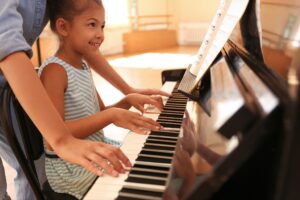
Piano is one of the most common instruments parents start their kids on, and most of the questions that come up in the first few weeks are practical ones. What does the first lesson look like? How much practice is realistic for a beginner? Do we need an actual piano at home, or is a keyboard enough? When is the right age to start, and how do we find a teacher who’s a good fit? Here’s what tends to be useful to know before lesson one and through the early months.
When Should Kids Start Piano Lessons?
The short answer most parents are looking for is somewhere between six and nine, but the longer answer is that age is the wrong question. A four-year-old who already sings along to every song in the car and can sit and look at a picture book for fifteen minutes is more ready than a seven-year-old who has never shown interest in music. We’ve worked with both. The four-year-old usually thrives if the lessons are built for a four-year-old. The seven-year-old may need a slower start.
If you’re still uncertain that your child is ready, the question worth asking is not “are they old enough” but “are they curious yet.”
Read: How to know if your child is ready for piano lessons
What Happens in the First Piano Lesson
The first lesson is mostly a meeting. The teacher and student spend a few minutes figuring out how they want to be in a room together for the next half hour, and a good teacher reads the child quickly enough to follow their lead from there.
Once the room settles, the teacher checks in to see what the child already knows. A child who has never touched a piano gets a different first lesson than one who has been picking out melodies on a family keyboard for months, and a good teacher tailors the session to match. From there, most first lessons cover the same handful of foundations:
- A tour of the instrument. A short introduction to the keys, the pedals, and how sound is produced makes the instrument feel less intimidating from the start.
- Posture and hand position. The way a child sits and holds their hands at the bench shapes everything they play from there on. Teachers spend real time on this in the first lesson because bad habits formed early are hard to undo later.
- A first look at musical notes. Most kids leave the first lesson knowing what a few notes look like on the page and where they live on the keyboard. Reading music comes gradually, but the introduction starts here.
- A first pass at rhythm. Usually through a clapping exercise or call-and-response game. Rhythm is the backbone of every piece a child will eventually play, and teaching it through games makes it stick faster than drilling.
A good first lesson sends the child home curious, comfortable, and asking when the next one is.
How to Prepare Your Child for Their First Lesson
The first lesson goes more smoothly when a few small things are in place.
- Comfortable clothing. Something your child can move freely in, so they’re not thinking about their sleeves while the teacher is showing them hand position.
- A fed, rested child. Right after school sometimes works. Right after a long sports practice rarely does.
- A quiet space. Pets and younger siblings briefly elsewhere, no TV in the next room.
- A notebook or beginner book. Only if the teacher has asked you to pick one up ahead of time. Most will bring their own materials.
In the lesson itself, the most helpful thing a parent can do is step back. Sit nearby if your child needs the reassurance, and many do for the first few weeks, but let the teacher and child build their own thing. The trust between them is what every later month is going to lean on, and it starts forming in the first thirty minutes.
What Piano or Keyboard Do You Need at Home?
The most common question we hear in the first week is some version of “do we really need a real piano.” The honest answer is no, not on day one. A beginner just needs a keyboard they can practice on between lessons, and plenty of students stay on a good digital instrument for years and progress just fine. Most families start digital and move toward an acoustic piano later, if they move at all.
What matters more than the brand is whether the keyboard has a few features that support piano lessons.
| Feature | What to look for | Why it matters |
| Keys | 88 keys, weighted or semi-weighted | Gives the fingers something to push against, which is how technique builds. A full 88 keys leaves room to grow into advanced repertoire. |
| Touch | Touch-sensitive (volume responds to pressure) | Lets a child play with expression rather than just hitting notes. |
| Stand and bench | A stable stand and an adjustable bench | Posture shapes how a child sounds a year from now. The bench needs to come up to the right height. |
| Pedal | At least a sustain pedal | Comes into play early, even in beginner pieces. |
Read: How To Select The Best Piano For Your Kids’ Lessons
How Long Before You See Results from Piano Lessons?
The first three months are quieter than parents expect. A child who starts in September probably won’t be playing recognizable holiday songs by Christmas, and that isn’t a setback. The early months are about laying down the foundations that everything else gets built on, one milestone at a time.
| Timeframe | What most kids learn |
| Month 1 | Comfort at the bench, names of a few keys, and a feel for the difference between playing softly and playing loudly. Most of month one is about getting the child to feel at home with the instrument. |
| Month 2 | A short piece played with one hand, plus the start of reading basic notation on the page. This is usually the month parents first hear something that sounds like a song. |
| Month 3 | Working with both hands separately, picking up new notes, and feeling real ownership of what they can play. By the end of month three, most kids have a small repertoire they can play through without prompting. |
Visible progress tends to show up around month two or three, but the bigger shift happens internally before then. A child who is comfortable at the bench, willing to make mistakes, and starting to recognize notes on the page is on track, even if no one outside the lesson room can see it yet.
Choosing the Right Piano Teacher for Your Child
The teacher matters more than almost anything else. A child who clicks with their teacher looks forward to practice and stays engaged through the plateaus that every beginner hits.
Personality fit is also the hardest thing to read from a website or a phone call, which is why a trial lesson tells you more than any bio ever will.
A few things are worth looking for:
- Experience with your child’s age group. A great concert pianist isn’t always a great teacher for a six-year-old.
- A personality that matches your child. Warm, patient, and a little playful goes a long way with younger students.
- Clear communication with parents. You should know what’s happening in the lesson and what you can do at home to support it.
- A practical fit with your family. Schedule, location, and lesson format all count.
At Lessons In Your Home, our in-home piano lessons put the teacher your living room, which keeps piano part of regular life instead of one more thing to drive to. For families where coming to the house isn’t practical, online piano lessons with the same local teachers cover the gap.
All our teachers are background-checked, trained, and personally matched to the student based on instrument, age, personality, and goals. This is what builds the kind of teacher-student relationship that makes great music lessons for kids actually stick at any age.
Start Music Lessons in a Way That Fits Your Child
The first few months of piano lessons set the tone for everything that follows, and four things tend to carry a child through them: a good first lesson, a manageable practice habit, a keyboard they can actually use at home, and a teacher who fits the family. When those pieces are in place, the early curiosity stage turns into a real relationship with the instrument.
Lessons In Your Home can help you find a piano teacher who fits your child’s personality, schedule, and the way they like to learn. When you’re ready to start, contact Lessons In Your Home and we’ll pair your child with the right teacher.
Frequently Asked Questions
How long does it take to see progress in piano lessons?
Most beginning students start playing short, recognizable pieces within two to three months of consistent weekly lessons. Reading basic notation, coordinating both hands separately, and feeling comfortable at the bench all tend to fall into place by the end of month three. Faster progress is possible with regular daily practice, but the early months are mostly about building the habit and the relationship with the teacher.
How long are piano lessons for kids?
Most piano lessons for young beginners are 30 minutes, which matches the typical attention span for ages 5 to 8. As children grow and develop stronger focus, lessons often move to 45 minutes or an hour.
How much do piano lessons for kids cost?
Private piano lesson pricing varies by location, teacher experience, and lesson format. Group and studio lessons usually cost less than private in-home or one-on-one instruction. Reach out to local providers for accurate pricing in your area.
What if my child wants to quit after a few months?
The 3-to-6-month mark is when wanting to stop is most common. The novelty has worn off and the work has started to feel like work. Before stopping, talk to the teacher. They usually know if the child is in a normal plateau or if something about the lesson needs to change. Often the answer is a switch in repertoire, a small performance opportunity, or a short break, not the end of lessons altogether.
What if my child doesn’t want to practice?
Practice resistance is normal, especially in the first few months. Short, daily sessions of 10 to 15 minutes work better than long weekly ones, and consistency matters more than perfection. A good teacher will adjust the approach when practice becomes a battle.
Are in-home piano lessons better than studio lessons?
In-home piano lessons remove travel time and let children learn in a familiar space, which often makes focus and consistency easier. Studio lessons can offer performance opportunities and exposure to other students. The right format depends on your child’s personality, your family’s schedule, and the teacher.