What Makes Great Music Lessons for Kids

Teaching Beyond the Curriculum
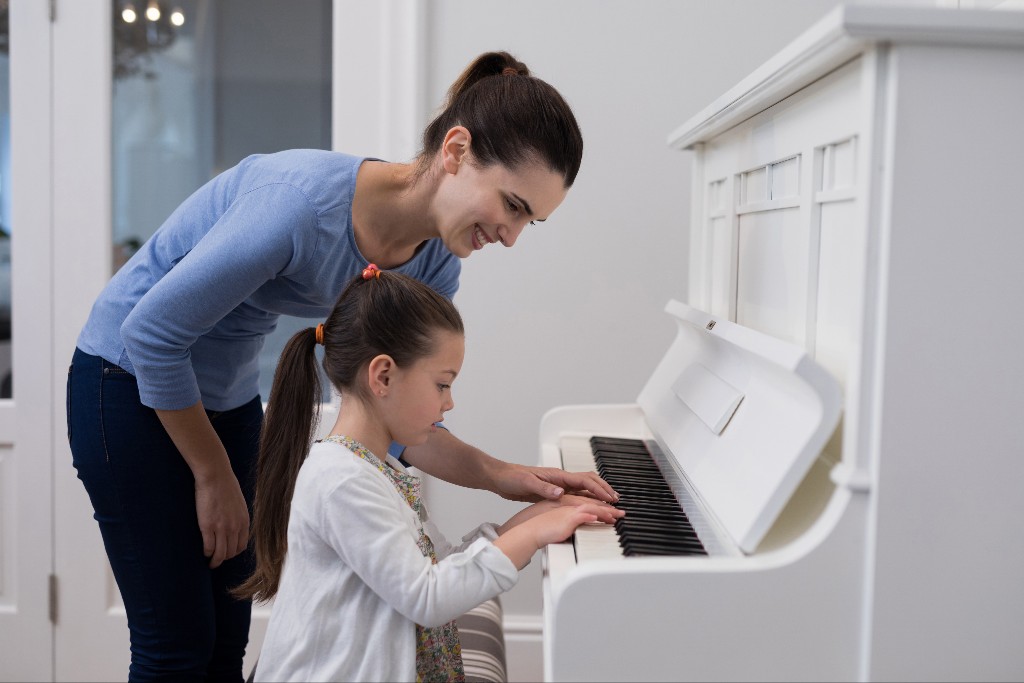
A great lesson isn’t just about the notes your child plays. It’s about the teacher who noticed your kid seemed a little off today and knew to go slower. The one who remembers that she’s nervous about the school recital and builds the lesson around that. The one who actually shows up for your child, not just the curriculum.
Ask most parents what they hoped for when they signed their child up for music lessons, and the answers are rarely about technique. They wanted their kid to find something. A creative outlet. A sense of accomplishment. Something to look forward to.
Getting there requires more than a good teacher who knows their instrument. It takes a specific kind of teaching, one that treats the child as a whole person and not just a student working through a progression.
After nearly 30 years of in-home music lessons for kids across the country, here’s what we’ve seen matter most.
Teaching Families Across the Country Since 1997
|
10 cities
Atlanta, Baltimore, Dallas, Denver, Houston, Kansas City, Miami/South Florida, Orlando, Seattle, Washington, DC |
Ages 5 to 75
Beginner to advanced, every stage of life |
Every
instrument Piano, guitar, violin, voice, drums, brass, strings, and more |
A Teacher Who Listens Before They Teach
Most lessons begin the same way: sit down, open the book, pick up where we left off. But a child who had a rough day at school isn’t in the same place as a child who can’t wait to show what they practiced. A great teacher reads that before they play a single note.
Listening first changes everything about how a lesson unfolds. It might mean scaling back the plan for the day. It might mean starting with something the student already loves and feels confident in. It might just mean acknowledging that things feel hard right now and letting the music be a bit of a refuge.
This sounds small, but it’s actually the foundation of progress. Children learn better when they feel seen. And a teacher who pays attention to who your child is on any given Tuesday will build more trust, and ultimately more skill, than one who runs the same lesson plan week after week, regardless of what’s in the room.
The Relationship Is the Curriculum
One of our teachers once brought bacon bits to a lesson. A student had casually mentioned she’d never tried them. No particular reason. It just came up. So the next week, the teacher showed up with a small bag.
That moment had nothing to do with music. And it had everything to do with why that student kept coming back.
Children don’t stay motivated by technique alone. They stay motivated because they feel connected to the person teaching them. A teacher who remembers small details, who follows up on things a student mentioned weeks ago, who makes a child feel genuinely known, that relationship becomes the reason the lesson matters.
What we’ve seen across decades of teaching is that the students who grow the most aren’t always the most naturally gifted. They’re the ones who have a teacher they don’t want to let down. That’s not something any curriculum creates. It’s something a relationship creates.
Meeting Kids Where They Are, Not Where They Should Be
There’s a version of music instruction that runs on a fixed timeline. By week four, you should know this. By month three, you should be here. And when a child falls behind that schedule, it becomes a source of pressure, sometimes for the teacher, sometimes for the parent, and almost always for the kid.
A great lesson doesn’t work that way. Progress in music is rarely linear. A child might sail through one concept and stall completely on the next. A week without much practice doesn’t erase everything that came before it. A lesson where a student plays the same song they’ve played for three weeks can still be a great lesson if something new is understood, felt, or enjoyed within it.
This means a good teacher brings flexibility to every session. They have a sense of where a student is going, but they’re not rigid about the path. When a kid is struggling, they find another way in. When a kid is flying, they let them fly.
The goal of any given lesson isn’t to hit a checkpoint. It’s to leave a child feeling like they can do this.
Encouragement That Actually Means Something
Kids know the difference between a teacher who says “great job” reflexively and one who means it. Empty praise fades fast. Specific, genuine encouragement lands differently.
When a teacher says “that was the cleanest you’ve ever played that transition” or “I noticed you held the bow differently today and it really showed,” a child understands that their teacher is paying close attention. That specificity is motivating in a way that general positivity isn’t.
The same applies when things go wrong. A great teacher doesn’t make a child feel bad for struggling, but they don’t paper over it either. Instead, they help the student understand what happened, then offer something clear and concrete to work on, so the experience feels less like failure and more like part of learning. Honest feedback delivered with warmth builds the kind of confidence that actually lasts.
Positive reinforcement in music lessons isn’t just about making kids feel good. It’s about building the belief that effort leads somewhere. That belief is what keeps a child playing through the hard parts.
An Environment Where It’s Safe to Sound Terrible
Every musician, at every level, has to spend a lot of time sounding bad before they sound good. That’s not a failure of the student or the teacher. It’s just how learning an instrument works.
What makes the difference is whether a child feels safe enough to try, get it wrong, and try again without embarrassment. A private lesson in a familiar space, with a teacher who has already established trust, creates exactly that kind of safety. There’s no audience. There’s no comparison to other students. There’s just the music and the relationship.
This is one of the quieter benefits of learning at home. A child in their own environment is usually more relaxed, more willing to experiment, and less worried about looking foolish. Those conditions accelerate learning in ways that are hard to manufacture elsewhere.
What Progress Actually Looks Like
Ask a child who has been taking music lessons for kids for two years what they’ve learned, and they might not list the scales they know or the pieces they’ve played. They might tell you about a recital where they weren’t as scared as they thought they’d be. About learning something hard and sticking with it. About a teacher who made them feel like they were capable of more than they realized.
That’s real progress. Technical skill is part of it, but it’s not the whole picture.
We’ve watched students go from five-year-olds who could barely sit still through a lesson to teenagers who play for their own peace of mind. We’ve had former students reach out years later to say they still have a piano in their home, or that music was the one constant thing during a hard stretch of their life.
A great music lesson plants something. With the right teacher, over enough time, it grows into something the child carries with them long after the lessons end.
A Teaching Philosophy Centered on Your Child
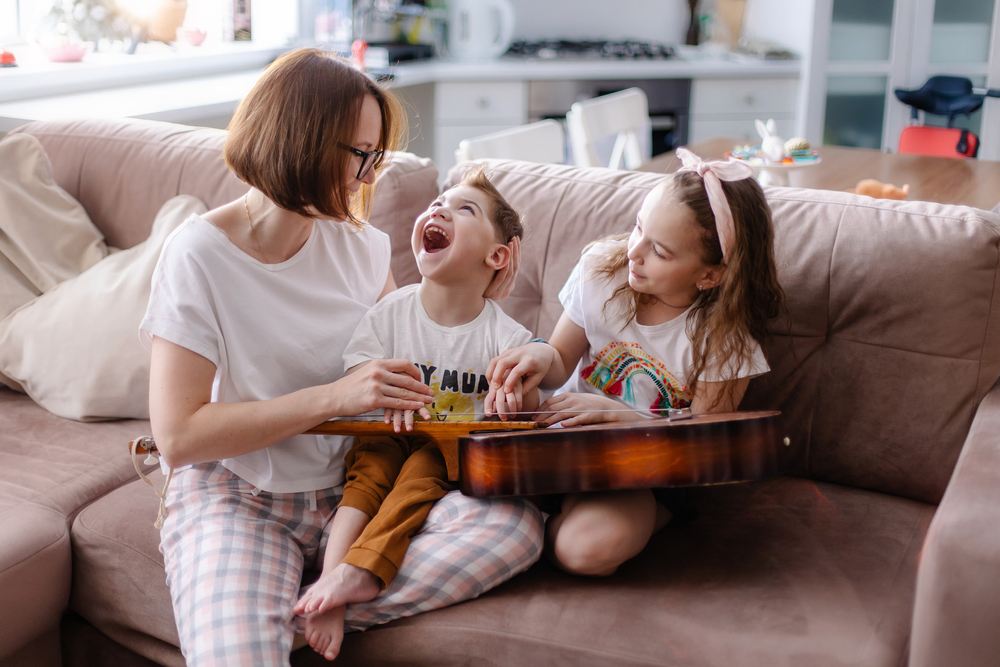
At the heart of all of this is a simple belief: children learn best when they feel known, supported, and comfortable enough to grow at their own pace.
That has shaped the approach behind Lessons In Your Home from the beginning. Teaching students in their own homes, week after week, has made it easier for us to see the full picture, not just how a child plays, but how they learn, what encourages them, what makes them hesitate, and what helps them feel confident enough to keep going.
Over time, that perspective became the foundation of our teaching philosophy.
Questions Parents Often Ask
Our youngest students are five. At that age the goal isn’t mastery; it’s exposure and enjoyment. A good teacher will calibrate entirely to where your child is, whether that’s getting comfortable holding an instrument or playing their first song. Interest matters more than age.
We look at your child’s age, instrument, personality, and schedule. If the fit doesn’t feel right after a few lessons, we’ll make a change. Getting it right is more important to us than sticking to the first match.
It comes up more than you’d think, and it doesn’t derail progress the way parents often fear. A good teacher builds the session around where a student actually is. The lesson adjusts. Learning still happens.
Piano, guitar, violin, voice, drums, and a full range of brass, strings, woodwinds, and percussion. If you’re unsure where to start, we’re glad to help you think through the right fit for your child.Have more questions? Read our common FAQs or contact us today!
Yes. One-on-one lessons in a familiar home environment often work particularly well for children who find group settings overstimulating. Our teachers adapt their approach to the individual student, not the other way around.
Helpful Next Steps
If you are just getting started, these pages can help you take the next step with confidence:
- How to Choose the Right Instrument for Your Child
- [What Makes a Great Music Teacher for Kids]
- [Music Lessons at Home vs. Studio vs. Online]
- [A Parent’s Guide to Supporting Music Lessons]
- Benefits of Music Education for Children