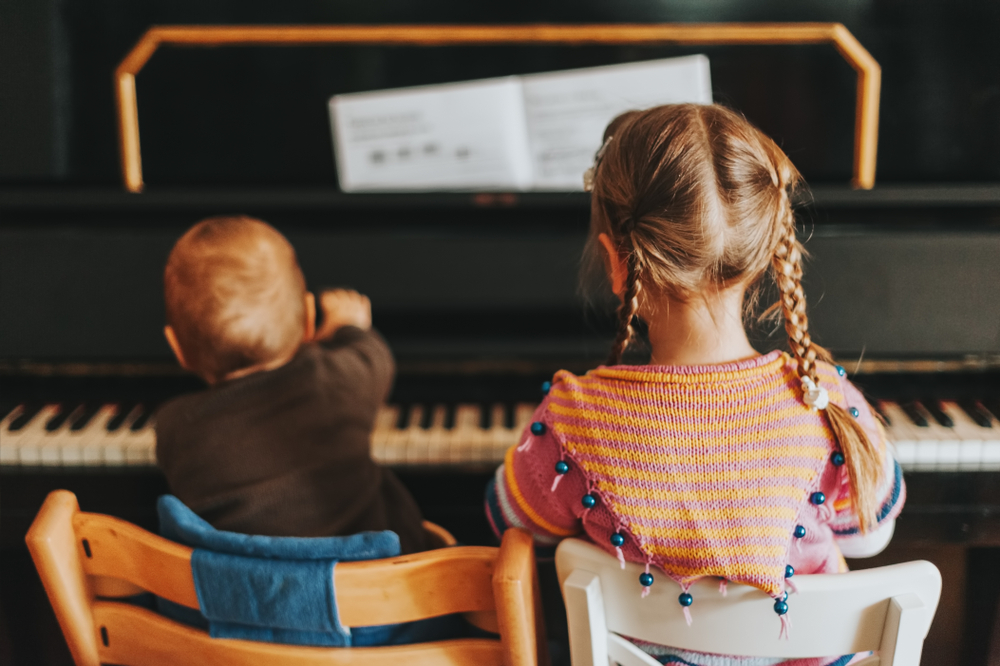
Learning to play the piano gives your child a skill they can enjoy for the rest of their life. Even if they never plan to perform or study music formally, they can always sit down and play for themselves and enjoy a deeper understanding of music.
What many parents do not realize is that the benefits go far beyond the music itself. A good piano teacher supports your child’s growth in many areas, and piano lessons often help children develop skills that show up in school, at home, and in their confidence. The developmental benefits are meaningful and long-lasting, and they often appear much sooner than parents expect.
Benefits of Playing Piano at a Young Age
Learning to play the piano at a young age supports many parts of a child’s development. From memory and concentration to creativity and emotional well-being, the positive effects of playing can touch several areas of their life.
How Piano Sharpens Listening and Memory Skills
Playing the piano encourages children to listen carefully and notice small differences in sound. Some research suggests that musical training may support healthy auditory processing, and many pianists spend time developing strong listening habits through practice. Piano students also memorize many different songs, which helps develop their memory “muscles” over time.
This regular practice with listening and remembering can support skills like recalling information, following instructions, and staying with a task.
Piano Inspires Creativity in Young Learners
On the surface, piano lessons may look like a child is simply playing the notes on the page. In reality, there is a lot of room for creativity. Children can experiment with playing pieces faster or slower, louder or softer, and they may begin to improvise or write their own music.
Studies have shown that while playing music, the parts of the brain involved in creativity are very active, even when a pianist is playing the music exactly as it is written. Piano gives kids a safe, structured way to explore their creative side.
Read more: Nurturing Your Child’s Creativity Through Music Lessons
Piano Practice Helps Children Build Strong Work Habits
Learning and playing piano requires consistent effort. Piano students may spend hours practicing each week, especially as they become more advanced. They learn how to concentrate on their lessons and stay focused, even when a piece is challenging.
These experiences help children build discipline and stronger work habits. The ability to concentrate and stick with a task can support them in their studies and eventually in their future work.
Piano Lessons Naturally Teach Time Management
Piano lessons help children begin to understand how to manage their time. They need to fit practice sessions into their week, along with homework and other activities. As they grow and start to participate in recitals or auditions, planning practice time becomes even more important.
This experience of balancing practice with other responsibilities helps children begin to understand time management in a simple, real-world way.
Piano Supports Early Math and Reading Development
A number of studies have found that musical activities can support skills like counting, recognizing patterns, and processing language. Every child is different, and these connections tend to grow gradually. Piano will not replace schoolwork, but learning rhythm, reading music, and noticing musical patterns can help strengthen the kinds of thinking children also use in math and reading.
Some brain imaging research has shown that playing piano engages areas of the brain involved in language-related tasks, which gives children another meaningful way to practice these skills.
Piano Strengthens Coordination and Fine Motor Skills
Hand-eye coordination and fine motor control are important for many daily tasks, and playing piano can help strengthen both. Through regular practice, children learn to move their fingers with greater control and coordinate both hands more effectively.
Over time, these motor skills become more refined and can support other activities that require careful, coordinated movement.
Piano Gives Children a Calming Way to Relax
Playing the piano can help children relax, especially those who enjoy music. Some research suggests that music-making may help reduce stress and support emotional well-being, which can contribute to a calmer mood.
This can be especially helpful for children who experience anxiety or who are dealing with mood-related challenges. Having a familiar, enjoyable activity like playing the piano can give them a healthy outlet.
Piano Lessons Help Build Confidence and Self-Esteem
Learning to play the piano can boost a child’s self-esteem. At first, they may feel unsure, but as they become more comfortable and start to play pieces well, they see their own progress.
They realize that they can master an instrument, even if it takes months or years, and that their hard work is worth it. This sense of achievement can help them feel more capable and confident in themselves.
Read more: Music Lessons as a Confidence Booster
Key Takeaways
Piano lessons can offer many benefits during childhood, including:
- Supporting listening skills and memory
- Encouraging creativity and self-expression
- Helping build strong work habits
- Introducing early time management skills
- Reinforcing thinking processes used in math and reading
- Strengthening coordination and fine motor control
- Providing a calming outlet for stress
- Building confidence and self-esteem
These benefits grow naturally as your child continues to learn and enjoy playing. If you are looking for simple ways to support your child’s progress at home, you may find our guide helpful: 8 Ways to Help Your Child Get the Most Out of Their Private Music Lessons
FAQ: Piano Lessons and Child Development
Yes. Piano lessons involve concentrating on music, listening carefully, and staying engaged throughout each piece. Over time, this repeated focus can help children feel more comfortable paying attention to tasks.
Playing piano can be relaxing and can help reduce stress levels. For some children, it offers a quiet moment to unwind and express themselves in a healthy way.
Piano lessons can support skills that also show up in school, such as recognizing patterns, counting, and language processing. These connections develop gradually and look different for every child. While piano is not a guarantee of better grades, the focus and confidence children build can positively influence how they approach learning.
Yes. As children learn pieces and see their own improvement, they often feel more capable and proud of themselves. This steady progress helps build self-esteem in a natural way.
Discover the Joy of Piano Playing – Enroll with Lessons in Your Home Today!
If your child is interested in piano, this is a wonderful way to support both their musical growth and personal development. At Lessons in Your Home, we have piano teachers in Atlanta (and in other locations, too!) who come right to your home for every lesson. We also offer live online lessons that are taught by local music teachers and shaped around your child’s needs.
You do not need musical experience to support your child. We will help you understand how lessons work and guide you through each step.
Contact us today to learn more about our piano lessons and find the best fit for your family.