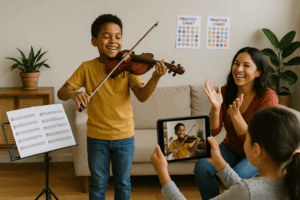
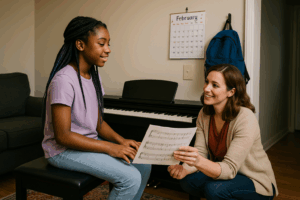
I am a firm believer in having clear goals when it comes to music practice. Students must ALWAYS know what it is they are trying to achieve in any given practice session. Necessarily, they must first know what it is they need to work on. That is where the teacher provides the input about what
Lessons In Your Home Blog
Academic Benefits of Music Lessons from a D.C./Baltimore Music Teacher
Many times, I am asked by parents about the academic benefits of having their children take music lessons. We hear all the time that learning music improves math scores and assists in other areas of academic performance, but why? My take on it is that music lessons and learning to read music are ‘brain exercises’
Drum Sets- Electronic Vs. Acoustic? Learning to Play Drums
As an experienced drum set teacher in Miami, FL, many parents ask me whether they should purchase a standard acoustic drum set or the increasingly popular electronic drum set for their young drum student. Either is fine, but there are definitely pros and cons with both. An electronic set may seem more practical on the
Beyond the Gold Star: How Stickers and Goal Setting Help Music Students Grow
When I started teaching, I underestimated the power of a shiny sticker. Now? I keep an entire drawer stocked. Why? Because structured rewards like stickers—paired with thoughtful goal setting in music lessons—consistently produce big results, especially for younger students. This post isn’t a lecture—it’s a real look at what’s working in our studios, week after
A D.C. & Baltimore Piano Teacher’s Favorite Methods: Age 7 to 12 Years Old
On average, most students Lessons In Your Home works with on piano fall into the 7 to 12 year old age range. We definitely have a lot of students who are younger and older, but as a general age group, this is the most popular. It seems also that authors of the standard, popular piano
Why In-Home Piano Lessons in D.C. Are a Smart Choice for Families
If you’ve ever tried getting your child to a piano lesson across D.C. traffic after a long day of school and work, you already know: studio lessons can be a logistical nightmare. Between parking struggles, tight schedules, and unpredictable weather, many D.C.-area families are turning to a more flexible, family-friendly alternative—in-home piano lessons in D.C.
How Music Lessons Support Learning Differences Like Autism and Dyslexia
We’ve seen it over and over again: a child with autism, ADHD, or dyslexia walks into their first music lesson unsure and hesitant—and walks out smiling, proud, and more confident than before. That’s not a coincidence. Thoughtfully taught music lessons support learning differences by offering a unique mix of structure, creativity, and sensory engagement that
Beginning Guitar Lessons for Kids: What to Expect (Acoustic or Electric)
We’ve helped hundreds of kids start their musical journey on guitar—and we know that as a parent, you’ve got questions. Whether your child is drawn to shredding on electric or strumming acoustic melodies, we’re here to help you understand what to expect when starting beginning guitar lessons for kids. Here’s what we tell families in
How Music Teachers Motivate Kids (So You Don’t Have To)
We get this question a lot: “How do I keep my child motivated to practice?” The short answer? You don’t have to do it alone. When you work with a qualified private teacher, their job isn’t just to teach technique—it’s to motivate kids with music in a way that sparks curiosity, confidence, and joy. Our
Favorite Piano Methods for Young Beginners. – Piano Teacher in D.C. & Baltimore
Every piano teacher has preferences on which piano methods to use for each age group, and as a piano teacher living in D.C., I definitely have my top picks for young beginners. After years of experience, I have compiled my own hybrid method that draws from the top piano curriculum resources to create a personalized