Communicating With a Purpose

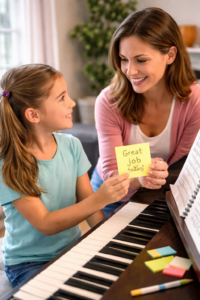
A parent once told us something simple after a lesson: “I love when I get those little updates. It helps me feel like I’m part of what’s happening.” Nothing about the lesson had changed. The teacher was doing a great job, the student was progressing, everything was on track. The only difference? Communication. A Small

Read More

Being Part of a Family That Isn’t My Own

Being Part of a Family That Isn’t My Own As a teacher at Lessons In Your Home, we become part of the families we teach. After all, we go into our students’ homes once each week, and while it’s only for a short time, the consistency is enough to make us feel like part of

Read More

Family

What Is Music Theory? A Simple Guide for Parents and Young Musicians

If your child is starting music lessons, you may find yourself wondering:“What is music theory, and does my child really need it?” The short answer? Yes—and it’s probably not what you think. At Lessons In Your Home, we don’t treat music theory like a separate, stuffy subject. Instead, we weave it into every lesson in

Read More

What is music theory

What’s a Whole Note Anyway? The Secret Language of Rhythm

If your child is new to music lessons, you’ve probably heard strange new words floating around your home:Whole note. Half note. Quarter note. Rest.Maybe you’ve even seen them scribbled in a practice notebook or music book. To a young learner, rhythm might seem like the most confusing part of reading music. But here’s the secret:

Read More

teaching rhythm to young music students

Treble or Bass? Helping Kids Make Sense of Music’s Two Clefs

If your child is learning music—whether it’s singing, violin, trumpet, or cello—they’ll eventually come face-to-face with the two most important symbols in music reading: the treble clef and the bass clef.

To us, these might look like fancy swirls and dots. But to your child, they can be confusing gates to the music world—unless someone helps make sense of them.

At Lessons In Your Home, we teach young musicians not just what to play, but how to read the language of music.

treble and bass clef for kids learning music

Lines and Spaces: Why the Music Staff Isn’t as Scary as It Looks

When your child looks at a sheet of music for the first time, they might see a blur of black dots, lines, and symbols that seem like a secret code. And to be honest, they’re kind of right—music is its own language. But here’s the good news: it’s a language your child can learn to read, just like they learned their ABCs.

Repeat the Songs You Know How to Play

At Lessons In Your Home, our team of dedicated music teachers spend a lot of time helping students learn new songs. But do you know what we love just as much? Encouraging our students to repeat the songs they already know how to play. Some students are eager to move on as soon as they

Read More

8 Ways to Help Your Child Get the Most Out of Their Private Music Lessons

Private music lessons can be an incredible experience, offering students a chance to grow musically, develop discipline, and build confidence. But success in lessons doesn’t just happen during the lesson itself—it’s the result of consistent effort, engagement, and the right kind of support at home. If your child is taking private music lessons, here are

Read More

Voice and Piano Teachers American Idol Audition

How Auditioning for American Idol Shapes Jessica Johnston’s Approach to Teaching Music At Lessons In Your Home, we’re proud to have such a diverse group of talented educators on our team, and Jessica Johnston is no exception. Her journey from performer to passionate music teacher brings a unique perspective to the way she nurtures her

Read More