For music teachers, it is easy to focus solely on performance pieces or technique exercises during weekly lessons. We only have so much time with a student each week, and to keep progress on the instrument going, it’s easy to neglect another equally important area of music instruction—music theory.
teaching methods
How to Keep Piano Lessons Positive and Consistent
The majority of students taking lessons start because the know music is fun, some students fall deeply in love with it and some of those choose to consider music as a career. That’s the facts. So in my experience, I keep piano lessons positive as my main method.

How Parents Help Piano Lessons Thrive
When parents actively support music lessons at home, the student’s progress often accelerates—but it’s not because they teach. Real growth comes when parents help with focus, routine, and encouragement in ways that reinforce rather than frustrate lessons. Three Key Ways Parents Can Support Effectively 1. Establish Consistent Practice Routine Children benefit most from short, daily
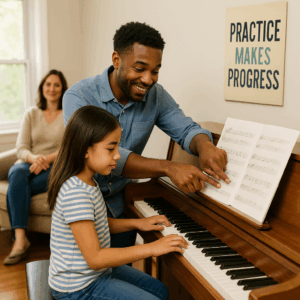
Three Steps to Good Piano Posture: Healthy Technique from the Start
Like in so many areas of life (at least our chiropractors would tell us) posture is so very important to your overall performance. Piano is an instrument that benefits greatly from proper posture. In this article I will give three simple “techniques” to help achieve good piano posture.

Steps And Skips In Piano Music – Basic Music Intervals
A great basic step in learning to read piano music understands intervals. Intervals for those who don’t know are the name given for the distance between two notes. This article is a basic approach on how I like to teach steps and skips in piano music to my elementary aged students. Each student is different
The Advantages Of Playing Piano Duets With Beginner Students
This article is for teachers working with beginner piano students who are looking for ways to enrich the first year of lessons. The focus is on duets and how they provide different advantages in getting a feel for the instrument.
Teaching Complex Music to Beginners: A Practical Approach for Young Students
We’ve all been there—a student hears a challenging piece and wants to play it right now. As private music teachers working with younger students, we love that enthusiasm. But we also know that teaching complex music to beginners requires patience, smart planning, and plenty of creativity. The goal isn’t to say “you’re not ready.” Instead,
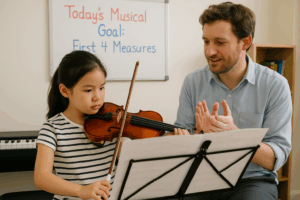
From “Ugh” to “Aha!”: Making Music Theory Fun for Beginners
Confession: I used to hate music theory. Like, really hate it. All those symbols and Italian words? No thanks. But years later—after becoming a private music teacher—I realized something amazing. When approached the right way, music theory is fun for beginners. Seriously. So if your student groans at the sight of a treble clef, here’s

Your Saxophone Teacher’s Practice Checklist: What We’re Really Looking For
Hey there! If you’ve ever wondered what your teacher actually wants to hear during your lesson, this guide is for you. We’re not expecting perfection—but we are hoping you’re following some key steps during the week. Below are our top saxophone teacher practice tips to help you get the most out of each session (and

Forget The Prize, It’s The Piano Teacher Game
As the founder of Lessons In Your Home I have the privilege of working with 100’s of teachers from across the country in a type of mentor-ship role. It’s one of the favorite things I do everyday. I can get a call from a teacher with a dilemma or situation that they may need help