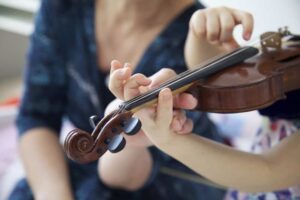
Most children are ready for violin lessons somewhere between ages four and seven, and getting started comes down to a few basics: a violin sized to your child’s arm, a teacher who works well with young beginners, and realistic expectations for the first few months. Lessons In Your Home has guided parents through these steps since 1997, and our violin lessons are built around how young students actually learn.
What You’ll Find in This Guide
- What Age Can Kids Start Violin Lessons?
- Getting Your Child Ready Before Lessons Start
- Finding a Violin That Fits Your Child
- Should You Rent or Buy a First Violin?
- What to Expect From the First Violin Lessons
- Helping Your Child Practice at Home
- Violin Teachers Who Come to You
- Frequently Asked Questions About Violin Lessons for Kids
What Age Can Kids Start Violin Lessons?
Many children start violin between ages four and seven, and plenty begin later with just as much success. Readiness matters more than the number.
A child who can focus for five to ten minutes, follow simple directions, and manage small-hands tasks like holding a pencil has the foundation a first lesson needs. Real interest helps just as much, and it shows early, in questions about the violin or air-bowing along to music in the car.
From there, age shapes the lessons rather than deciding them. Four-year-olds learn through short bursts of games and imitation, while older beginners handle longer focused work. If your child is very young or needs to move constantly, starting on piano or drums and coming to violin later works well. Our guide to exploring instruments with your child compares the options.
Getting Your Child Ready Before Lessons Start
A little groundwork before the first lesson makes the early weeks smoother, especially for younger kids. In the weeks leading up to lessons:
- Listen to violin music together, from movie scores to fiddle tunes, so the sound becomes familiar
- Watch a violinist play, live if you can or on video, since seeing it done is what makes most kids want to try it
- Play clapping and rhythm games to build timing before the instrument arrives
- Sneak in fine motor practice through drawing, cutting, and building with small pieces
- Talk about what lessons will look like, so the first one feels exciting instead of unknown
None of it requires a musical background on your part, and all of it gives the teacher a head start.
Finding a Violin That Fits Your Child
Violins come in fractional sizes, from 1/16 for the smallest players up through 3/4 before reaching full size, and the right one depends on your child’s arm length, not their age. For a quick check, have your child extend their left arm: they should be able to curl their fingers around the scroll, the curled end of the neck, without straining. A teacher or violin shop can confirm the size in under a minute, and our guide to choosing the right violin size for your child includes the exact arm measurements for every size.
Don’t buy a size up for your child to grow into. An oversized violin forces bad posture and puts clean notes out of reach, so size to the arm your child has now and trade up when they outgrow it.
Should You Rent or Buy a First Violin?
For most young beginners, renting is the smarter start. Kids move through two or three sizes as they grow, and most rental programs include size exchanges, so you trade up instead of buying again. Renting also keeps costs low while your child decides how they feel about the instrument.
If you’d rather buy, skip the cheapest online kits. Bargain violins are often made from poor materials that won’t hold tuning or produce a clean tone, and it’s very much a case of you get what you pay for. Before purchasing:
- Stick to reputable starter brands; our teachers’ picks for the best beginner violin brands narrow the field
- Check the bow separately: it should suit your child’s hand, flex without feeling flimsy, and balance evenly
- Budget for the small accessories: rosin, a shoulder rest, a case, and a tuner
- Ask your child’s teacher before you commit; they’ll spot problems a sales floor won’t mention
What to Expect From the First Violin Lessons
Early violin lessons move slowly on purpose, because everything a violinist does later builds on the first habits. The opening weeks focus on standing with relaxed posture, holding the violin and bow correctly, and drawing a clean, steady sound from open strings. Expect squeaks while those pieces come together. Every violinist starts with them, including the ones your child will someday admire, and a patient teacher treats a squeaky note as information rather than a mistake.
For young children, good teachers wrap the work in games, movement, and songs kids already know, so lessons stay fun while technique forms. Most beginners do well with 30-minute lessons, moving to longer sessions as focus grows.
Method books like Suzuki and Essential Elements give lessons a clear path, and your child’s teacher will pick one that fits their age and learning style. The first months bring small milestones, a steady bow hold, a clean open string, and eventually a first recognizable song your child will play for anyone who stands still long enough.
Helping Your Child Practice at Home
Short, regular practice beats long, occasional practice. Ten to fifteen minutes most days is plenty for a beginner, and you don’t need any musical background to make it work. What helps:
- Pick a consistent time, so practice becomes routine instead of a nightly negotiation
- Sit nearby and listen; your presence matters more than corrections
- Point out one specific thing that improved, since noticed progress keeps kids going
- When motivation dips, ask the teacher to add a song your child picked or set a small goal for the week
Read: How to Motivate Your Child to Practice Music
Violin Teachers Who Come to You
With in-home lessons, your child plays in a room they already know, the violin stays where practice happens, and you can see for yourself how lessons are going. Lessons In Your Home matches violin teachers to students based on personality, age, and goals as much as skill level, because a four-year-old beginner and a twelve-year-old heading for orchestra need different teachers. Every teacher is background checked, professionally trained, and supported by nearly three decades of experience with young musicians. Tell us a little about your child, and we’ll help find a violin teacher who fits.
Frequently Asked Questions About Violin Lessons for Kids
Is the violin hard for kids to learn?
The violin has a steeper start than piano because the player creates each note’s pitch and tone rather than pressing a ready-made key. A properly sized instrument and a patient teacher flatten that curve considerably. Most kids can play simple recognizable songs within their first few months.
What size violin does my child need?
Young children typically play fractional sizes between 1/16 and 1/2, moving up as they grow. The right size depends on arm length, and a teacher or violin shop can measure your child in under a minute. When in doubt, size down rather than up.
How much does a violin for a kid cost?
Rentals usually run a modest monthly fee and include size exchanges, which makes them the most economical route for growing kids. Decent beginner violins can be bought new for a few hundred dollars. The cheapest online instruments usually end up costing more once you replace them.
Read: How Much Do Music Lessons Cost?
Does my child need a violin before the first lesson?
No, and waiting is usually better. The teacher can size your child properly and point you to a good rental before you spend anything. Many families finalize the instrument during the first week of lessons.
How long does it take a child to learn the violin?
First songs typically arrive within a few months, and comfortable, confident playing builds over years of steady lessons. The pace depends on age, practice consistency, and how well the teacher fits the student.
Read: How Long Does It Take to Learn the Violin? A Beginner’s Guide
Can kids take violin lessons online?
Yes, online violin lessons work well for many children, especially with a parent nearby to help with setup for the youngest students. Families often mix formats, using online lessons when travel or schedules get complicated.