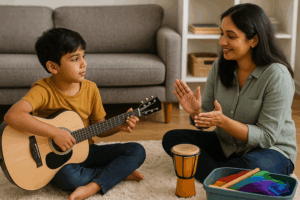
We’ve seen it firsthand: children who struggle with emotional regulation, anxiety, or attention challenges often thrive in music lessons. When guided by a patient, trained instructor in a familiar environment, kids can express big feelings safely and gain confidence note by note.
As private music teachers who work with a wide range of learners—including students with emotional and behavioral needs—we know that music lessons help children emotionally when those lessons are approached with flexibility, structure, and empathy.
Why Music Works as an Emotional Tool
Music activates many areas of the brain at once—engaging motor skills, memory, rhythm, and emotion. For children who may not yet have the words to express how they feel, music becomes a language of its own.
Benefits of emotionally responsive music lessons include:
- A calming, rhythmic structure that eases anxiety
- A safe outlet for self-expression
- Gradual improvement in focus and task-following
- Opportunities to reflect and reset when overwhelmed
According to the American Music Therapy Association, active participation in music is shown to reduce stress and support positive behavior in children with a wide range of emotional needs.
Our Approach: Encouragement, Not Expectation
Here’s how we structure lessons to support emotional and musical growth at the same time:
1. Normalize Feelings in the Lesson
If a student arrives upset or distracted, we start by validating their feelings. We might ask, “Would you like to play something soft today or something loud?” Music choices can reflect mood and provide relief.
2. Flexible Lesson Pacing
Some days, a student might be too anxious to focus on notation or finger placement. That’s okay. We adapt by:
- Moving to body percussion
- Exploring familiar tunes
- Taking rhythmic “movement breaks”
Even a short game clapping quarter notes can re-center a child.
3. Build Trust Over Time
For children with trauma backgrounds or social anxiety, music lessons can feel vulnerable. We prioritize:
- Predictable routines
- Kind, specific praise
- Letting the student lead when possible
This approach empowers the child while building emotional resilience.
Making Space for Musical Breakthroughs
When a child connects emotionally with music, it can unlock growth in other areas—language, coordination, confidence, and relationships. We’ve seen students who struggled in classroom settings shine in a one-on-one music lesson.
For additional ideas on supporting younger students, read our post on connecting your child to their music lessons.
FAQ: Emotional Growth Through Music Lessons
Can music lessons support mental health?
Yes. While not a substitute for therapy, music lessons with a sensitive teacher can promote calm, confidence, and coping strategies.
How do I know if my child is ready for music lessons?
If your child shows interest in sounds, songs, or instruments—even if focus is brief—they’re likely ready to start.
What if my child refuses to participate?
That’s normal. We approach resistance with patience, humor, and flexibility, helping students feel safe and successful on their terms.