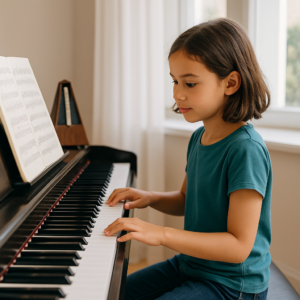
Parents often come to us with questions like “Which book should my child start with?” A child’s first book can make lessons feel exciting and manageable, or confusing and discouraging. When the material is clear and engaging, children usually approach the piano with more confidence, and practice at home becomes easier for everyone.
The books below are the ones our teachers reach for most often. They’re friendly for new learners, they introduce ideas in small steps, and they help children feel successful early in the process.
Why Choosing the Right Book Matters
A good beginner book does more than teach notes. It gives kids a gentle and steady introduction to music. When the visuals are appealing, and the lessons feel digestible, children stay motivated and understand what they’re working toward. Most importantly, the right book helps young learners build the confidence they need to enjoy their early progress.
Parents tend to notice a difference when a book matches their child’s age and learning style. The pages feel approachable, practice becomes more predictable, and lessons move forward with a clearer sense of direction.
Top 5 Book Recommendations for Young Beginners
These are the books that show up most often in our lesson plans and weekly practice routines. Each one supports beginners in a slightly different way.
1. WunderKeys Piano for Preschoolers (Ages 3–5)
WunderKeys is designed specifically for preschoolers. It uses storytelling, finger-play exercises, pattern recognition, and large, friendly illustrations to introduce early musical ideas without requiring reading skills. This makes it a gentle, playful start for children who are curious about the piano but not ready for traditional notation.
2. Faber: My First Piano Adventure – Book A (Ages 5–6)
Faber markets this series for ages 5–6. It combines singing, movement, and imaginative pieces with joyful illustrations. The pacing is slow enough for new learners but varied enough to keep lessons interesting. Children who enjoy hands-on learning and creativity tend to connect with this method right away.
3. Piano for the Young Beginner (Evans): Primer A/B (Ages 5–6)
This series is marketed for young beginners and introduces concepts at a gentle pace. It starts with pre-staff notation and gradually moves into simple reading. The colorful artwork and clear sequencing make it a strong choice for early readers who thrive when progress feels steady and well-structured.
4. Alfred’s Basic Piano Library – Lesson Book 1A (Early-Elementary Beginners)
Alfred does not specify a precise age for 1A, but teachers commonly use it with early-elementary beginners who are ready to start reading on the staff. The book is known for its clear, step-by-step layout and friendly illustrations, which help new learners stay engaged and build confidence through short, achievable exercises.
5. Bastien Piano Basics – Primer Level (Ages 7–11)
Publisher Kjos describes this primer as designed for “average age beginners (7–11).” The layout is uncluttered, the pieces are short, and the progression is logical, making it well-suited for older beginners or students who prefer a straightforward, traditional method.
What These Piano Books Offer Young Learners
Although each book approaches learning differently, they share a few important qualities that help children succeed:
- They follow a structured path, so new skills build naturally.
- Their visuals and layout keep children interested without overwhelming them.
- Many include simple theory or ear-training activities that reinforce reading and rhythm.
These features give beginners the small wins they need to stay motivated, especially during those early weeks when everything is new.
How to Use a Piano Book Effectively at Home
A beginner book works best when it’s used in a steady, predictable way. Children need time to absorb each new idea, and a simple routine helps them feel more confident at the piano. These steps can make practice smoother for your family:
- Take one concept at a time. Spend a little time on each new idea before moving on.
- Let your child hear the piece first. A play-along video or teacher demonstration helps beginners understand rhythm and flow.
- Keep practice short and consistent. Even ten minutes a day helps a beginner make steady progress.
- Add a touch of creativity. Inviting your child to make up a simple melody reinforces what they’ve learned and keeps practice enjoyable.
Frequently Asked Questions
At what age is a good time for a child to start with these piano books?
Publishers often market early methods for ages 5–6, while pre-reading books like WunderKeys can be used with children as young as 3–5. The best starting point depends on the child’s attention span and interest.
Does it matter which book a child starts with, or will any beginner book work?
It matters more than most parents expect. Some books are built for early readers, while others support children who need larger notes, playful illustrations, or shorter songs. When the book matches the child’s developmental stage, lessons feel smoother and practice becomes easier to support at home.
How long should a beginner stay in a level?
Three to six months is typical, depending on practice habits and age. Short, consistent practice sessions help children progress more steadily than occasional long sessions.
Which book is easiest for parents to help with at home?
Alfred 1A and My First Piano Adventures tend to be the most intuitive. Their layouts are clean, instructions are clear, and the step-by-step approach makes it easier for families who are new to music to follow along.
Should we use digital apps along with the book?
Apps such as Simply Piano or the Alfred App can reinforce note reading and rhythm. They work best as supplements. The physical book provides structure, while apps offer extra repetition and variety.