Why Professional Schedule Management Matters in Private Music Lessons

When families invite a music teacher into their home each week, they are making space in their lives for something meaningful. Between school, sports, homework, and family activities, setting aside time for music lessons is a commitment. Professional schedule management is one of the ways we honor that commitment. At Lessons In Your Home, we

Read More

Why Lesson Plans Matter in Your Child’s Private Music Lessons

When parents picture a private music lesson, they often imagine a teacher arriving, opening a book, and helping their child play a song a little better than last week. And yes — that’s part of it. But behind every successful lesson at Lessons In Your Home is something far more intentional: a thoughtful, flexible lesson

Read More

Being Part of a Family That Isn’t My Own

Being Part of a Family That Isn’t My Own As a teacher at Lessons In Your Home, we become part of the families we teach. After all, we go into our students’ homes once each week, and while it’s only for a short time, the consistency is enough to make us feel like part of

Read More

Family

Why Music Teachers Teach

Where Music Teachers Come From Every music teacher starts as a musician with a story. Maybe it began in a school choir, a marching band, an orchestra, a rock group, or a private lesson at home. No matter where it started, there was always a community — a group of people who shared a love

Read More

Music Teacher

What Is Music Theory? A Simple Guide for Parents and Young Musicians

If your child is starting music lessons, you may find yourself wondering:“What is music theory, and does my child really need it?” The short answer? Yes—and it’s probably not what you think. At Lessons In Your Home, we don’t treat music theory like a separate, stuffy subject. Instead, we weave it into every lesson in

Read More

What is music theory

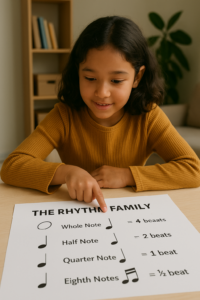
What’s a Whole Note Anyway? The Secret Language of Rhythm

If your child is new to music lessons, you’ve probably heard strange new words floating around your home:Whole note. Half note. Quarter note. Rest.Maybe you’ve even seen them scribbled in a practice notebook or music book. To a young learner, rhythm might seem like the most confusing part of reading music. But here’s the secret:

Read More

teaching rhythm to young music students

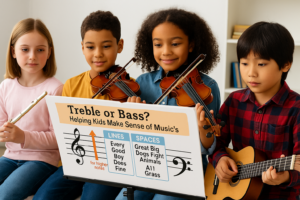
Treble or Bass? Helping Kids Make Sense of Music’s Two Clefs

If your child is learning music—whether it’s singing, violin, trumpet, or cello—they’ll eventually come face-to-face with the two most important symbols in music reading: the treble clef and the bass clef.

To us, these might look like fancy swirls and dots. But to your child, they can be confusing gates to the music world—unless someone helps make sense of them.

At Lessons In Your Home, we teach young musicians not just what to play, but how to read the language of music.

treble and bass clef for kids learning music

Lines and Spaces: Why the Music Staff Isn’t as Scary as It Looks

When your child looks at a sheet of music for the first time, they might see a blur of black dots, lines, and symbols that seem like a secret code. And to be honest, they’re kind of right—music is its own language. But here’s the good news: it’s a language your child can learn to read, just like they learned their ABCs.