Music Lessons for Kids with ADHD, Anxiety, and Learning Differences
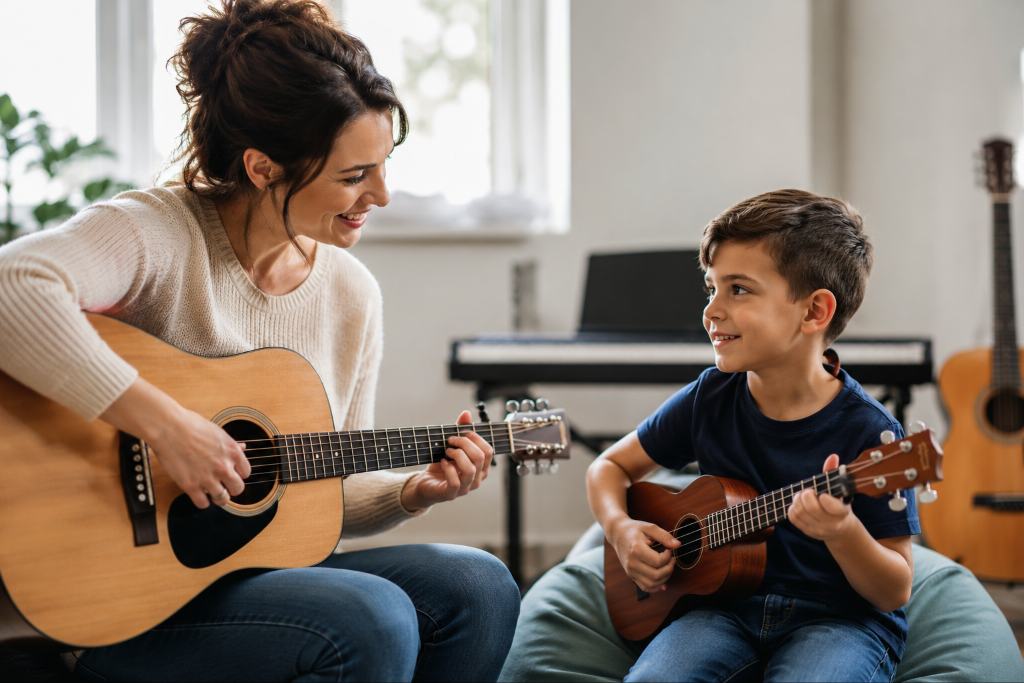
Kids who learn differently often have a striking relationship with music. A child with ADHD might lock onto a rhythm the second it starts, while a child with anxiety finds that singing loosens something words cannot reach. Many kids on the autism spectrum carry remarkable ears, holding onto a melody after hearing it once. More often than people expect, music meets these children through what they already do well.
Music lessons for kids with ADHD, anxiety, or a learning difference work best when the teacher starts there, with a child’s strengths, and builds out from them. At Lessons In Your Home, teachers come to the student and learn how a particular child listens, plays, and lights up before deciding how a lesson should go. Music lessons in your home begin in the room where a child already feels most like themselves, which shapes the lesson before a single note is played.
How Music Lessons Help Kids Who Learn Differently
Music reaches kids who learn differently for down-to-earth reasons, not anything mysterious. A good lesson is built to use the strengths these children already bring to it.
Rhythm gives attention something to hold onto. Following a beat, predicting the next note, and moving in time all happen at once, and for many kids the mix is the draw rather than the obstacle. Neuroscientists who study rhythm have shown that keeping a beat engages the brain’s movement-planning systems even when a child sits perfectly still, so a steady pulse can pull a restless child into focus where reminders fall flat.
The gains can reach past the lesson. Yamaha’s review of the research points to brain-imaging studies linking regular music practice with development in the areas tied to attention and self-control, a finding even the researchers call a hopeful possibility rather than a promise.
A strong ear becomes a head start. A lot of these children learn beautifully by ear, holding a melody after a single listen and leaning on that aural memory long before they read a note. A teacher who starts there builds on a real strength rather than working around a gap.
Playing gives a child a way to be heard. A student who finds words effortful can still say something at the keyboard, loud or soft, fast or slow, and have it land. For a lot of kids who learn differently, a lesson becomes one of the few places where expressing themselves comes easily and the result is something they made on purpose.
How Teachers Adapt Lessons for Kids with ADHD and Anxiety
Good teaching for these kids is not a special curriculum. It is a teacher paying close attention and making small, deliberate choices that let a child do their best work.
Start with the
ear

Many kids learn a piece by listening first, sometimes for weeks, which plays to a real strength and makes the music feel like an old friend by the time they play it.
Make the lesson easy to picture.
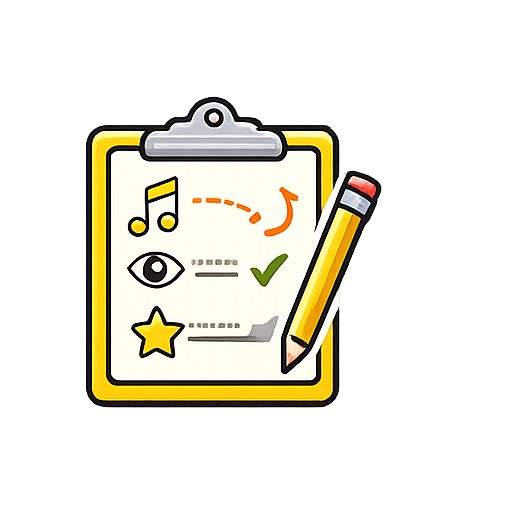
A simple visual or written run of the lesson, so a child can see what is happening now and what comes next, settles much of the worry that comes with the unknown.
Keep the shape familiar.
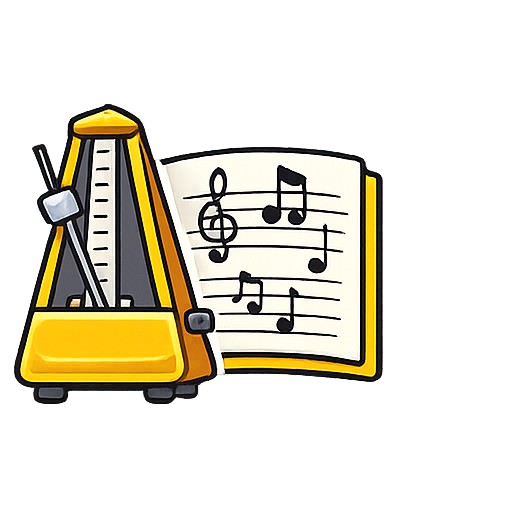
A predictable order, and a heads-up well before anything changes, lets a child spend their energy on the music instead of on bracing for surprises.
Take the sting out of mistakes.
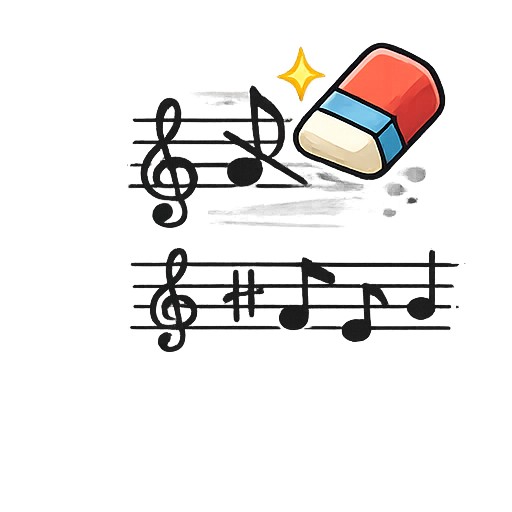
A lot of kids freeze on a wrong note and want to start the whole piece over. A teacher who treats a stumble as no big deal frees them to keep going.
Let the fidgeting
be.
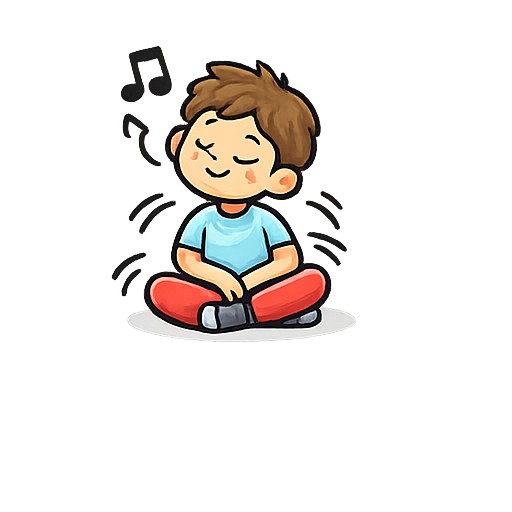
Humming, rocking, or a little movement often helps a child stay regulated, so a good teacher works with it instead of correcting it.
Build from small wins.
Short steps, time to take each one in, and quick encouragement when something clicks stack up into real pieces faster than they look.
None of this is a lighter version of a lesson. It is the kind of teaching specialists in music for kids with diverse learning needs have long relied on, and it helps every student who sits down to play, not only the ones with a diagnosis.
Read: Music Lessons for Special Needs Children
Why In-Home Lessons Fit Kids Who Learn Differently
A teacher who comes to your home is not meeting your child in isolation. They are stepping into a real house, with siblings nearby, a parent listening from the next room, and all the small details that make a family what it is. They get to see how a child plays in their own space, what makes them laugh, and what helps them try again after a hard note.
For a child who learns differently, the setting does a quiet kind of work. The instrument is their own. The light and the sounds are familiar. A teacher can dim a harsh light, turn down a fan that hums too loud, or skip whatever tends to overwhelm a particular child, because at home those choices are within reach. A lesson can fold into the life of the house instead of standing apart from it, and music starts to belong to the whole family rather than to one child for thirty minutes.
Online vs In-Person Music Lessons for Kids Who Learn Differently
Online vs in-person music lessons is not a question with one right answer for these kids. The better fit depends on the child, and it can change over time.
You might lean toward in-person if your child does best with another person right there in the room, responds to hands-on guidance at the instrument, or connects more easily face to face.
You might lean toward online if your child feels calmer with a little distance, settles with a screen as a contained frame, or has an easier week when a lesson does not depend on leaving the house.
Plenty of families move between the two as a child grows, which is part of why Lessons In Your Home offers online lessons alongside in-home ones. The right format is the one your child looks forward to and can show up for, week after week.
What Progress Looks Like for Every Child
Progress in music never looks the same from one child to the next, and with these students the range is simply wider and easier to see. For one child it is playing a line with both hands. Another sits through a whole lesson for the first time and asks for one more song. A third performs a recital piece start to finish. Each of those is a real milestone, and a teacher who treats it as one is the teacher a child keeps showing up for.
The right match matters more here than almost anywhere. Lessons In Your Home pairs each student with one of its trained, background-checked teachers based on instrument, schedule, and personality. When a child trusts the person beside them, they reach for things they would never risk in front of a stranger, and confidence built at the keyboard has a way of turning up at school and at home too.
Find a Teacher Who Meets Your Child Where They Are
A child with ADHD, anxiety, or a learning difference does not need a smaller version of music. They need a teacher with the patience to follow their pace and the skill to keep the music real while they do it. Lessons In Your Home was built on the belief that learning grows out of the relationship between a teacher and a student, which is what a child who learns differently thrives on. Every child deserves a way into something they can be proud of.
When you are ready, tell us about your child and we will match them with a teacher who fits their instrument, their personality, and the way they learn, at home, online, or at their school. If the first lesson is not the right fit, we will pair you with a different teacher, no obligation.
New to lessons? Start here.
- The Roadmap to Music Success: a step-by-step guide through deciding to enroll, choosing an instrument, finding the right teacher, and keeping a child motivated.
- Frequently asked questions: clear answers on how scheduling, teacher matching, and in-home lessons work.
Frequently Asked Questions
Are music lessons good for kids with ADHD?
Many kids with ADHD take to music quickly, because rhythm and sound give their attention something structured and rewarding to follow. A teacher who adapts the pace to the child, rather than forcing one method, is what makes it work. Lessons are not a treatment, but they can be a place a child genuinely succeeds.
Can a child with anxiety enjoy music lessons?
Often, yes, especially when lessons start gently and stay predictable. Learning a piece by ear first, keeping a steady routine, and giving a heads-up before anything changes all take the pressure off. Learning at home helps, since the child is already on comfortable ground.
Are music lessons the same as music therapy?
No. Music therapy is a clinical practice led by a trained therapist toward specific goals like speech or movement. Music lessons teach a child to play an instrument. A lesson can feel calming and confidence-building, but it is not a substitute for therapy.
Is it better to do lessons at home or online for a child with learning differences?
It depends on the child. In-person lessons suit kids who do best with someone right there and hands-on guidance, while online lessons suit kids who feel calmer with a little distance. Many families move between the two as their child grows.
My child has a lot of energy and finds it hard to focus. Can lessons still work?
Yes, and a skilled teacher plans for it. Movement, short steps, and frequent small wins are part of the lesson rather than signs it is going wrong, and progress is measured by the child’s own growth instead of a fixed timeline.
What age can a child with autism or ADHD start music lessons?
There is no single right age. Readiness has more to do with a child’s interest, and a teacher’s skill at meeting them where they are, than with a specific birthday. For many families, the best time to begin is when a child shows curiosity about an instrument.