How Much Do Music Lessons Cost
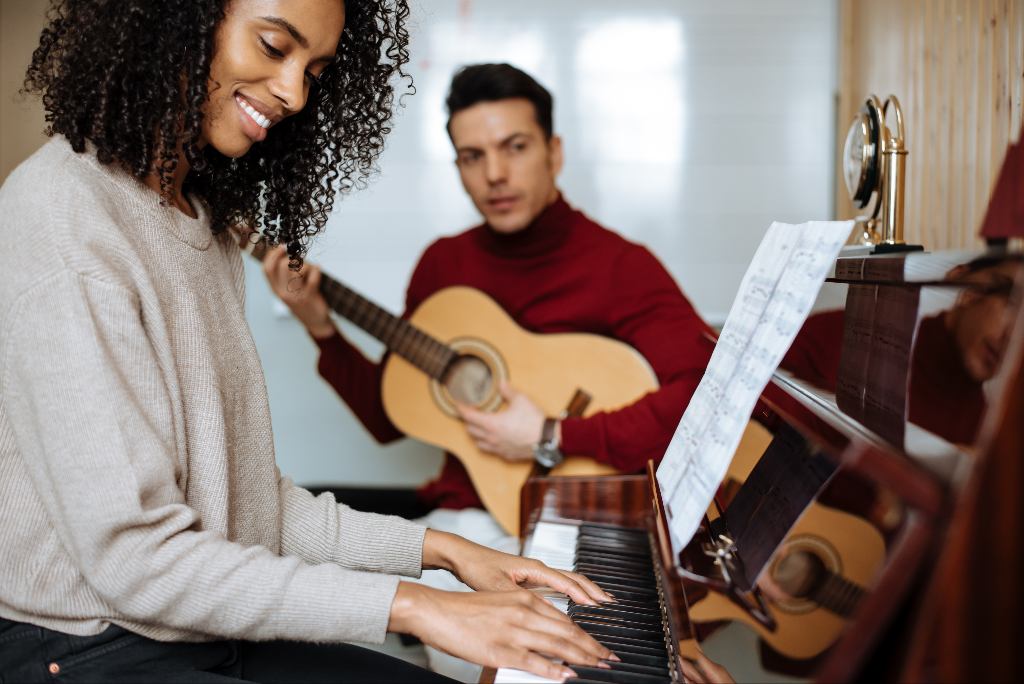
If you are looking into music lessons for your child, cost is usually one of the first questions on your mind, and it is a fair place to start. What you pay comes down to a few things: how long each lesson runs, the format you choose, your teacher’s experience, and where you live. Lessons also come in a few different shapes, from single hourly sessions to monthly and semester plans that help bring the per-lesson cost down, which usually leaves room to find something that works for your family.
At Lessons In Your Home, we help you sort through those choices and bring an experienced, background-checked teacher to your home or online, so the whole thing feels personal rather than one more thing to figure out on your own.
Typical Music Lesson Costs
Private music lessons in the United States generally run $68 to $130 per hour, or roughly $40 to $75 for a 30-minute lesson, which is where most young beginners comfortably start. Weekly 30-minute lessons usually come to about $160 to $300 per month, and a full semester of weekly lessons lands somewhere around $640 to $1,200. Group and online lessons cost less, often $17 to $65 and $30 to $108 per hour. Your own number depends mostly on lesson length, format, your teacher’s experience, and your city, and the rest of this guide walks you through each piece.
What This Guide Covers
- Cost of 30, 45, and 60-Minute Lessons
- Private, Group, and Online Lesson Costs
- Monthly and Semester Music Lesson Costs
- What Affects the Price of Music Lessons
- Music Lesson Cost by City
- Does the Instrument Change the Cost?
- Instruments, Books, and Other Costs to Budget For
- Ways to Lower the Cost of Music Lessons
- Is Paying for Music Lessons Worth It?
- When In-Home Lessons Aren’t the Right Fit
- Common Questions About Music Lesson Costs
Cost of 30, 45, and 60-Minute Lessons
Lesson length is the biggest thing that moves the price, since you are really paying for a teacher’s time. Most young beginners do great with 30-minute lessons, which are long enough to make real progress without wearing out a small child’s focus. As students grow and want to dig into technique, theory, and the pieces they are excited to play, many move up to 45 or 60 minutes.
| Lesson length | Typical private range |
|---|---|
| 30 minutes | $40 – $75 |
| 45 minutes | $55 – $100 |
| 60 minutes | $68 – $130 |
Group and online lessons follow the same pattern at friendlier rates. A 30-minute group class or online session comes in under the private figures above, since a group shares the teacher’s time and online lessons carry less overhead.
Private, Group, and Online Lesson Costs
Music lessons come in a few main formats, and each one strikes its own balance between cost and how much one-on-one attention your child gets. There is no single right answer here, only the one that fits your child and your week.
Private Lessons
Private lessons run about $68 to $130 per hour and give your child undivided attention. The teacher can move at your child’s pace and build each lesson around what they love, which is a real gift for a beginner finding their footing or an older student getting ready for an audition or recital. With Lessons In Your Home, private lessons can happen in your home, which saves you the drive and lets the teacher help set up a practice spot in the room your child already lives in.
Group Lessons
Group lessons run about $17 to $65 per hour per student and are a gentle, lower-cost way to begin. Children learn alongside other kids, which does wonders for rhythm, listening, and the confidence that comes from playing with others. Progress can be a little slower when the teacher’s attention is shared, which is why some families start here or pair a group class with private lessons.
Online Lessons
Online lessons run about $30 to $108 per hour and are a great fit for busy families or anyone without a teacher nearby. With a quiet corner and a steady internet connection, online music lessons work genuinely well, tend to cost a little less than in-person lessons, and open the door to great teachers beyond your own city. Some families mix online lessons with the occasional in-person check-in.
Every one of these has its place. Many parents still find in-home private lessons the easiest to live with, since a teacher who comes to you keeps the afternoon calm and helps a child stay steady with practice.
Monthly and Semester Music Lesson Costs
Most families do not pay one lesson at a time. Teachers usually bill monthly for weekly lessons, and many offer semester packages that lower the per-lesson rate when you commit to a longer stretch.
At the ranges above, weekly 30-minute lessons come to roughly $160 to $300 per month, and weekly 60-minute lessons run higher, around $270 to $520. A full semester of weekly 30-minute lessons, about fifteen to eighteen weeks, lands near $640 to $1,200. A one-time registration fee also applies when you enroll, which covers setting up your account and matching your child with a teacher.
A monthly or semester plan is where most families end up saving, since the per-lesson cost eases down compared with paying week to week.
What Affects the Price of Music Lessons
A few things nudge the price up or down, and none of them are mysteries once you know to look for them.
- Location. Larger metro areas like Washington, DC tend to run higher than smaller cities.
- Teacher experience. Advanced degrees, teaching credentials, and performance background can raise a teacher’s rate.
- Lesson length. Thirty, forty-five, or sixty minutes, as covered above.
- Format. In-home private, group, or online.
- Instrument. A few instruments trend slightly higher in some cities because of teacher specialization or demand.
Music Lesson Cost by City
Rates shift from one metro to the next, which is completely normal. The ranges below show what families tend to see across the cities Lessons In Your Home serves.
| City | Private | Group | Online |
|---|---|---|---|
| Atlanta, GA | $68 – $115 | $19 – $58 | $33 – $95 |
| Baltimore, MD | $70 – $130 | $21 – $65 | $35 – $108 |
| Dallas, TX | $68 – $115 | $19 – $58 | $33 – $95 |
| Denver, CO | $68 – $115 | $19 – $58 | $33 – $95 |
| Houston, TX | $68 – $115 | $19 – $58 | $33 – $95 |
| Kansas City, MO | $64 – $103 | $17 – $52 | $30 – $85 |
| Miami / South Florida, FL | $68 – $115 | $19 – $58 | $33 – $95 |
| Orlando, FL | $68 – $115 | $19 – $58 | $33 – $95 |
| Seattle, WA | $68 – $115 | $19 – $58 | $33 – $95 |
| Washington, DC | $70 – $130 | $21 – $65 | $35 – $108 |
Does the Instrument Change the Cost?
Happily, not by much. The national ranges hold across most instruments, though violin or voice can run a little higher in some cities where those teachers are in demand. If you want a closer look at one instrument, we keep dedicated guides for each:
- How Much Are Piano Lessons?
- How Much Are Guitar Lessons?
- How Much Are Violin Lessons?
- How Much Are Singing Lessons?
If you are still deciding what your child should play, our guide on how to choose a musical instrument for a child walks through how to match an instrument to a kid’s temperament and interests.
Instruments, Books, and Other Costs to Budget For
Lessons are not the only line in the budget. Most families spend a few hundred dollars over the first few months getting set up with the right gear, and a little planning here saves surprises later.
- Instruments. Renting is common for violins, since children outgrow sizes quickly, at around $20 to $40 a month. A beginner guitar usually runs $100 to $200, and a starter digital piano or keyboard can be $300 or more.
- Materials. Method books, sheet music, a stand, rosin, or spare strings tend to add $50 to $150 over the first few months.
- Extras. Recitals, accompanists, or competitions can add occasional fees of $30 to $60 per event. Practice apps and warm-up tools are usually low-cost or optional.
At Lessons In Your Home, your teacher hands you a short gear list and points you to trusted rental partners, which means you buy what your child actually needs and skip the rest.
Ways to Lower the Cost of Music Lessons
If the ongoing cost feels like a stretch, a few common choices bring it down without touching the quality of the teaching:
- Monthly or semester plans. Committing to a longer stretch usually lowers the per-lesson rate.
- Siblings together. Booking back-to-back lessons for siblings, or choosing a group format, often lowers the per-student rate and makes scheduling easier.
- Group as a supplement. Some families pair an occasional group class with private lessons, which gives a child both the social side and one-on-one attention.
- Start shorter. A 30-minute lesson is enough for most young beginners, and you can add time as they grow into it.
Is Paying for Music Lessons Worth It?
For most families, the value shows up in ways that go beyond a single recital piece. Regular lessons build focus, patience, and confidence, and a child who looks forward to lessons practices more honestly and sticks with it longer. A 30-minute weekly lesson is enough for a young beginner to make real, steady progress, which is why it is the most common starting point.
What makes the difference is usually the teacher, not the format or the price tag. A teacher who notices your child, adjusts to how they learn, and keeps lessons enjoyable is what turns a line item into progress you can see. Our take on what makes great music lessons for kids goes deeper into why that relationship matters more than any single factor.
When In-Home Lessons Aren’t the Right Fit
In-home private lessons are not the only good option, and it is worth being honest about that. Families on a tight budget may be better served by group lessons, online lessons, or a school music program to start. Some children genuinely learn better around peers, where a group setting adds energy and friendly motivation. And a student preparing for a specialized audition may need a teacher who works only out of a particular studio. If in-home private lessons are not the right match, a good provider will tell you so.
Getting Started With Lessons In Your Home
Pricing is only part of the picture. The bigger question is finding a teacher who fits your child, and that is the part we take seriously. Lessons In Your Home has matched families with experienced, background-checked teachers since 1997, pairing each student with someone who suits their instrument, personality, and schedule. Tell us a little about your child, and we will help you find the right teacher and a plan that works for your family. Contact us or find a teacher in your area to get started.
Common Questions About Music Lesson Costs
A 30-minute private lesson typically runs about $40 to $75, depending on your teacher’s experience and city. Thirty minutes is the length most young beginners start with, since it is long enough for real progress without stretching a small child’s attention.
Yes, for most beginners. A focused 30-minute lesson each week gives a young student enough time to learn, ask questions, and take away something to practice, without the fatigue a longer lesson can bring. Many students move up to 45 or 60 minutes later, as they take on more technique and repertoire.
Private lessons generally run $68 to $130 per hour in the United States. Group lessons run about $17 to $65 per hour per student, and online lessons about $30 to $108 per hour.
The national ranges are similar across instruments, though violin and voice can trend a little higher in some cities because of teacher specialization or demand. Our instrument-specific guides break down what to expect for each one.
Many families book back-to-back lessons for siblings, or choose a group format where children learn together. Both often lower the per-student rate and make scheduling easier.
It works a little differently than a traditional free trial. You complete the full enrollment first, including registration and your first month’s tuition through our MyLessons system. If you decide not to continue after the first lesson, you are only responsible for that lesson, and the rest of your tuition and registration fee are refunded.
Yes. Monthly and semester packages usually lower the per-lesson cost compared with paying hourly, which means families who plan to keep going tend to save by choosing one of those plans.